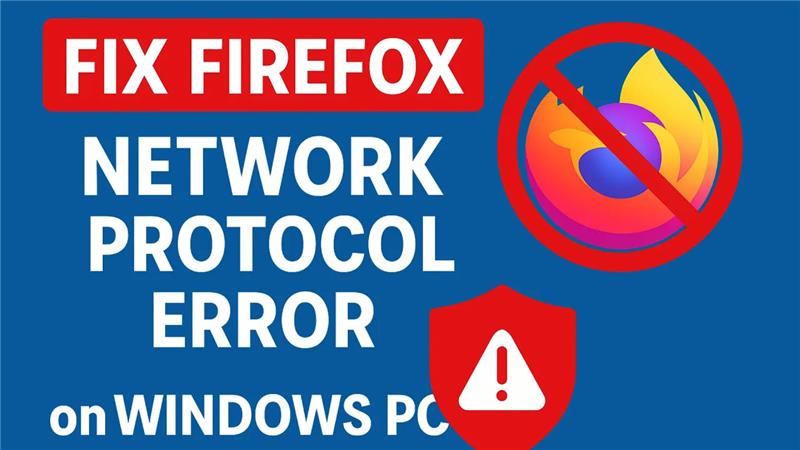
When using Firefox, you might see an error like:
“Network Protocol Error — Firefox has experienced a network protocol violation that cannot be repaired. The page you are trying to view cannot be shown because an error in the network protocol was detected.”
This means Firefox detected something unexpected or malformed in the data transmission or network protocol rules, and it’s refusing to load the page. It can occur even when the page works fine in other browsers.
✅ Steps to Fix Firefox “Network Protocol Error”
Try these fixes one by one until the problem is resolved:
1. Reload Page Bypassing Cache
- Press Ctrl + F5 or Ctrl + Shift + R to force the page to reload fresh from the server (ignoring cache).
- This often helps when the error is due to corrupted or stale resources stored locally.
2. Clear Cookies, Site Data & Cache
- Open Firefox → Click the menu (three horizontal lines) → Settings
- Go to Privacy & Security panel
- Under Cookies and Site Data, click Clear Data…
- Make sure Cookies and Site Data and Cached Web Content are checked → click Clear
- Then restart Firefox and try again
3. Disable Extensions / Add-ons
Some extensions can intercept or alter traffic in ways that violate protocol logic.
- Go to Menu → Add-ons and themes → Extensions
- Disable all extensions temporarily
- Restart Firefox → try loading the problematic site
- If that works, re-enable extensions one by one to find the culprit
4. Clear Service Workers / Site Workers
Service workers can sometimes hold onto outdated resources or interfere with page loads.
- Type
about:serviceworkersin the Firefox address bar - Check for entries related to the website showing the error
- Unregister / remove them
- Close and reload the site
Users have reported that clearing service workers resolved similar protocol errors.
5. Try in Firefox Safe Mode
Safe Mode disables extensions, hardware acceleration, and custom settings temporarily.
- Menu → Help → Troubleshoot Mode… (or Restart with Add-ons Disabled)
- In the dialog, click Start in Troubleshoot Mode
- Load the site again. If it works in Safe Mode, the issue likely comes from an extension or custom setting
6. Reset Firefox (Refresh)
If configurations or custom settings are messed up:
- Go to about:support in the address bar
- Click Refresh Firefox
- This resets settings to default but keeps your bookmarks and passwords
Note: You may lose some customizations or extensions.
7. Check Network / Proxy Settings
- Go to Settings → General → Network Settings
- Make sure Firefox is set to Use system proxy settings or No proxy (unless you intentionally use a proxy)
- Incorrect or misconfigured proxy settings can cause protocol conflicts
8. Update Firefox or Roll Back
- Ensure you are using the latest version of Firefox (Menu → Help → About Firefox)
- If the issue began after an update, you might consider rolling back to a previous version or waiting for a patch
9. Temporarily Disable Antivirus / Security Software
Some antivirus or firewall tools intercept HTTPS / SSL traffic and rewrite data. This can trigger protocol violations in browsers.
- Temporarily disable the antivirus or HTTPS scanning feature
- Try to load the page again
- If it works, add Firefox or that site to antivirus exceptions