Steam has a setting called “Allow Steam Networking to Share Your IP Address” that helps improve connection speed in multiplayer games. But sometimes, you might want to turn it off for privacy or security reasons. Whether you’re trying to fix lag, protect your network, or just exploring Steam’s options, it’s good to know how this feature works. In this blog, we’ll show you how to enable or disable the IP sharing setting in Steam, using simple steps anyone can follow. Let’s make your gaming experience smoother and safer!
How to Enable / Disable the “Allow Steam Networking to Share IP Address” Setting
Use these steps (derived from the tutorial and community sources) to toggle this setting:
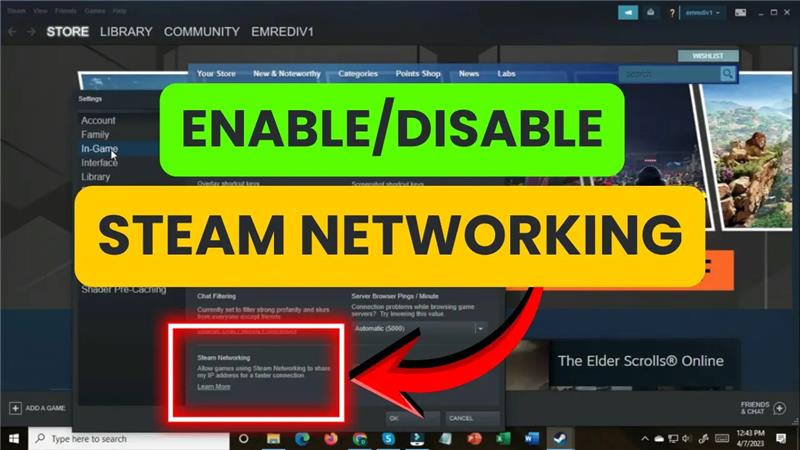
1. Open Steam and go to Settings
- Launch the Steam application on your PC.
- In the upper left, click Steam → Settings (or Steam → Preferences on some platforms).

2. Navigate to Remote Play / Remote Play settings
- In the Settings menu, find Remote Play section (or “Remote Play / Steam Networking” depending on your Steam client version).
- Alternatively, the option might appear under Host Options or advanced Remote Play settings.
3. Locate “Allow direct connection / share IP address” option
- Within the Remote Play / Host settings, look for a toggle labeled “Allow direct connection (IP sharing)” or “Allow Steam Networking to share IP address.”
- The label might vary slightly depending on your Steam client version.
4. Enable or disable the toggle
- To enable: switch the toggle ON / check the box so Steam can share your IP if needed.
- To disable: switch it OFF / uncheck the box, which prevents Steam from sharing your IP address for peer connections.
5. Save & restart
- After changing the setting, click OK or Apply in the Settings window.
- It’s a good idea to restart Steam (close it completely, then open again) for changes to fully take effect.