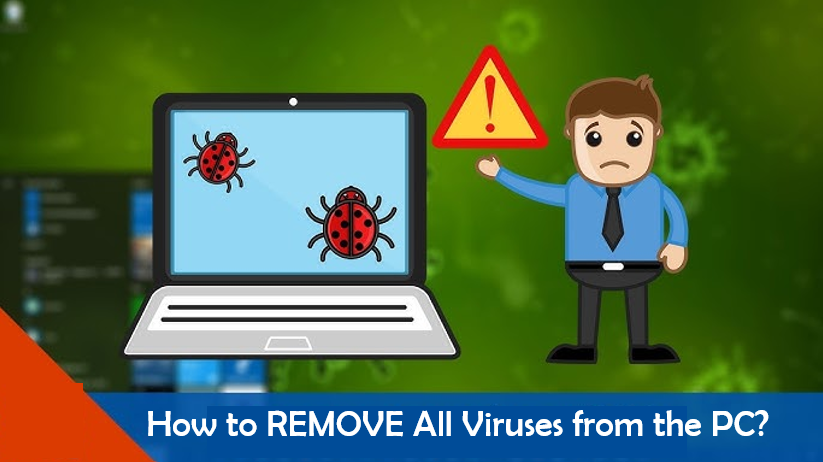
Removing all viruses from your PC doesn’t have to be difficult—even if your computer is running slow, acting strangely, or showing pop-ups. With the right steps, you can clean out viruses and malware quickly and make your PC safe again. In this blog, you’ll find easy ways to disconnect from the internet, clean temporary files, scan your system with trusted antivirus tools, and use built-in Windows features to remove every trace of infection. Follow these simple steps, and your computer will be running smoother and safer in no time.
🛡️ Step 1: Disconnect from the Internet & Backup Critical Files
- Immediately disconnect from the internet (turn off Wi-Fi or unplug Ethernet). This helps prevent further spread or communication with malicious servers.
- Backup only clean important documents (e.g. your personal files, documents, photos) to external media (USB drive, external HDD) before doing deep cleaning. Do not backup or copy executable files (.exe) or suspicious files — only user data files you’re confident are clean.
🔍 Step 2: Boot into Safe Mode (Minimal Drivers)
- Restart your computer and boot into Safe Mode (or Safe Mode with Networking, depending on instructions).
- Safe Mode disables many non-essential drivers and prevents many malware programs from auto-starting, making removal easier.
🧹 Step 3: Use a Dedicated Anti-Malware / Antivirus Tool to Scan & Remove
- Install or run a trusted antivirus / anti-malware scanner (if not already installed).
- Perform a full system scan, not just a quick scan. Let it detect and remove or quarantine all threats.
- The video emphasizes letting the tool do its job thoroughly — don’t interrupt mid-scan.
⚙️ Step 4: Remove Temporary Files & Run Cleanup Tools
- Use built-in disk cleanup utilities or third-party tools to purge temporary files, cache files, web browser junk, etc.
- Removing these can help eliminate residual malware files that might hide in temp folders.
🧮 Step 5: Use System Restore or Rollback (If Needed)
- If the infection is recent and you have a working restore point, consider rolling your system back to a state before the infection.
- This undoes changes the malware might have made to system files or settings.
🧱 Step 6: Reset / Reinstall System Files (Repair)
- Use system repair tools (such as SFC /scannow, or DISM on newer Windows) to fix corrupted system files.
- If the damage is severe, in extreme cases the video suggests considering a clean Windows reinstall as a last resort (after backing up clean data).
🧼 Step 7: Reinforce Protection & Prevent Future Infections
- After the system is clean and stable, reconnect to the internet.
- Install or re-enable a reliable real-time antivirus / anti-malware software and keep it updated.
- Ensure your OS, drivers, and applications are kept up to date (patches often close vulnerabilities).
- Practice safe browsing: avoid downloading files from untrusted sources, don’t click suspicious links or attachments, and use safe email practices.