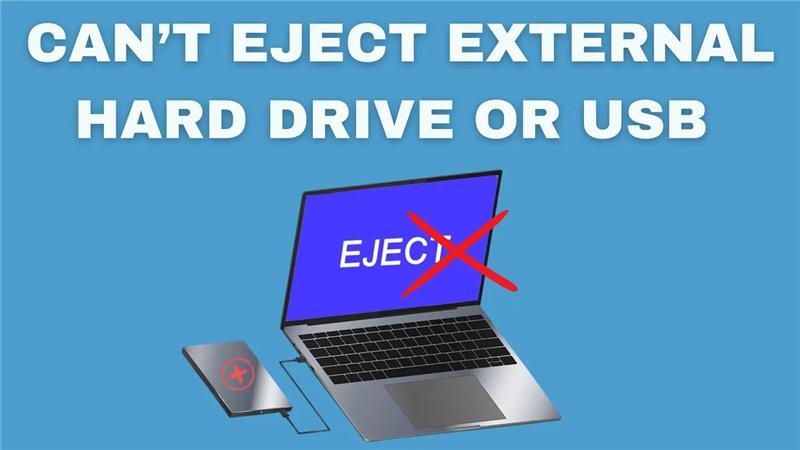
If you see errors like “You can’t eject this device right now—it’s in use” or “Windows cannot stop your hardware device because it’s busy”, here are the top troubleshooting steps to resolve it:
1. Close All Apps and Windows Accessing the Drive
Even invisible handles like File Explorer can prevent safe removal.
- Press Ctrl + Shift + Esc to open Task Manager.
- Look for explorer.exe or any app that might be accessing the drive and close them.
2. Use PowerToys’ File Locksmith Tool
A helpful utility that shows exactly which process is using the drive and lets you unlock it instantly:
- Install [Microsoft PowerToys].
- Enable File Locksmith.
- Right-click the USB drive → Show more options → Unlock with File Locksmith.
- Terminate the process blocking the drive.
3. Set Quick Removal Policy
This removes the need to eject the drive manually, though it comes with a small risk of data corruption if removed mid-write:
- Open Device Manager.
- Expand Disk drives → right-click your external drive → Properties.
- Go to Policies tab and select Quick removal.
- Click OK to apply.
4. Use Safely Remove Hardware Icon
Sometimes the tray icon works even when the context menu doesn’t:
- Click the upward arrow on the taskbar → Safely Remove Hardware and Eject Media → select your device → confirm removal.
5. Take the Drive Offline via Disk Management
This cleanly detaches the drive from Windows, allowing safe removal:
- Press Win + X, choose Disk Management.
- Find your external drive, right-click → Offline.
- Once offline, safely unplug the drive.
6. Check for Driver or Hardware Interference
- Ensure you’re on Quick Removal policy (see Step 3).
- If the drive isn’t ejecting due to driver issues or non-ARM compatibility, consider updating or using official drivers.
7. Shut Down or Sign Out as a Last Resort
If nothing else works:
- Sign out and back in to close background processes.
- Or shut down your computer entirely—this safely disconnects the drive.
Final Tips
- Tools like File Locksmith offer quick, exact solutions when standard methods fail.
- Always safely eject to avoid data corruption.
- Use Quick Removal if you unplug drives frequently and can risk a small chance of corruption.