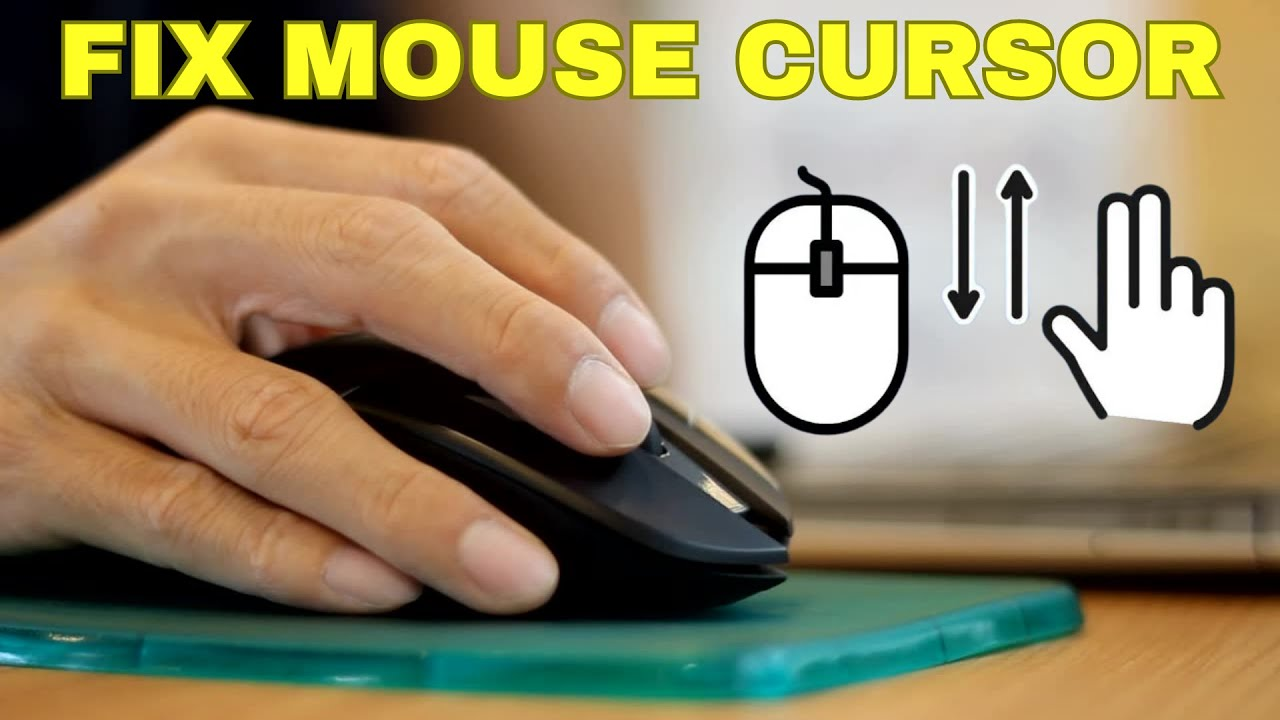
If your mouse cursor is moving in the opposite direction on your Windows 11, 10, 8, or 7 computer, it can make even simple tasks frustrating. This strange issue usually happens because of incorrect mouse settings, corrupted drivers, or a glitch in the touchpad configuration. The good news is that it’s easy to fix with a few quick adjustments, like updating drivers, checking pointer settings, or running hardware troubleshooting tools. In this blog, you’ll learn simple step-by-step methods to fix the reversed mouse movement and get your cursor working normally again.
✅ Step-by-Step Fixes
Here are the steps recommended (and typically shown) in the video. Try them in order until your cursor behaves normally again.
1. Check the Hardware / Battery
Especially for wireless mice:
- Ensure the mouse has fresh batteries (or is adequately charged).
- Reconnect the USB dongle / receiver.
- Try using the mouse on a different surface (some surfaces might confuse sensors).
- If possible, test the mouse on another computer to rule out hardware fault.
If the issue is only on your system — proceed to software fixes.
2. Run Windows’ Troubleshooter for Hardware & Devices
Windows includes a built-in troubleshooter that can detect and fix issues with peripherals:
- Press Win + R, type
msdt.exe -id DeviceDiagnostic(or use the Hardware and Devices troubleshooter). - Follow the prompts to detect issues.
- Let Windows apply the suggested fixes, then restart your computer and test the mouse again.
This is often one of the first quick checks shown in the video.
3. Update or Reinstall Mouse / Touchpad Driver
A corrupt or outdated driver is a common culprit.
- Open Device Manager (Win + X → Device Manager).
- Expand Mice and other pointing devices (or Human Interface Devices).
- Right-click your mouse / touchpad device → Update driver → “Search automatically for updated driver.”
- If updating doesn’t help, choose Uninstall device, then restart. Windows will reinstall a default driver automatically on reboot.
- Optionally, visit the manufacturer’s website (for your laptop or mouse brand) and install the latest driver manually.
Many users report that reinstalling or updating the driver solves the reversed motion issue.
4. Reset / Change Mouse Settings
Sometimes pointer settings might accidentally get flipped.
- Go to Settings → Devices → Mouse (or in older Windows: Control Panel → Mouse).
- Check options under Pointer Options, Pointer Speed, or Orientation (if available).
- In touchpad settings (for laptops), look under Touchpad → Scroll & Zoom and find a “Reverse scroll direction” or “Down motion scrolls down” toggle.
- Also consider enabling Mouse Trails (a temporary visual feedback) — sometimes toggling this can reset pointer behavior (as shown in the video).
If there’s an option to “Reset to defaults” for pointer settings, try that.
5. Run System File Checks (SFC / DISM)
System corruption can also affect input devices. The video suggests using:
DISM /Online /Cleanup-Image /RestoreHealth
sfc /scannow
Steps:
- Open Command Prompt as Administrator.
- Run:
DISM /Online /Cleanup-Image /RestoreHealth - After it completes, run:
sfc /scannow - Let Windows scan and repair corrupted system files.
- Restart and test the mouse.
These commands are commonly used in Windows repair workflows and often fix odd behavior.
6. Reset the Mouse (If Supported)
Some mice, especially gaming or specialized models, have a hardware reset or re-pair mode:
- For example, for Swiftpoint 300 series, you can hold both mouse buttons, spin the wheel until both LEDs light up, then let go — this resets the orientation.
- Check your mouse’s manual or manufacturer’s website to see if such a reset exists.
If no reset exists, skip this step.
7. Test & Final Checks
- After doing updates / resets, reboot the computer.
- Check the mouse on different surfaces or mousepads.
- Try another mouse if available to see if the issue is system-wide or specific to one device.
- If the problem returns, reapply steps above or consider more drastic fixes (e.g., clean install, hardware replacement).